Orangevale ADU Checklist for Buyers and Sellers
Orangevale | Buyers & Sellers
Can You Add an ADU to an Orangevale Property? What Buyers and Sellers Should Verify
By Lauren Pierce, Realtor® | Windermere Signature Properties
Last Updated: November 3, 2026
At a Glance
An ADU may be possible on an Orangevale property, but the answer depends on the parcel, not the postal address. Buyers and sellers should confirm the governing jurisdiction, zoning, existing residential use, overlays, setbacks, access, utilities, easements, and permit history before treating a second unit as feasible or valuable.
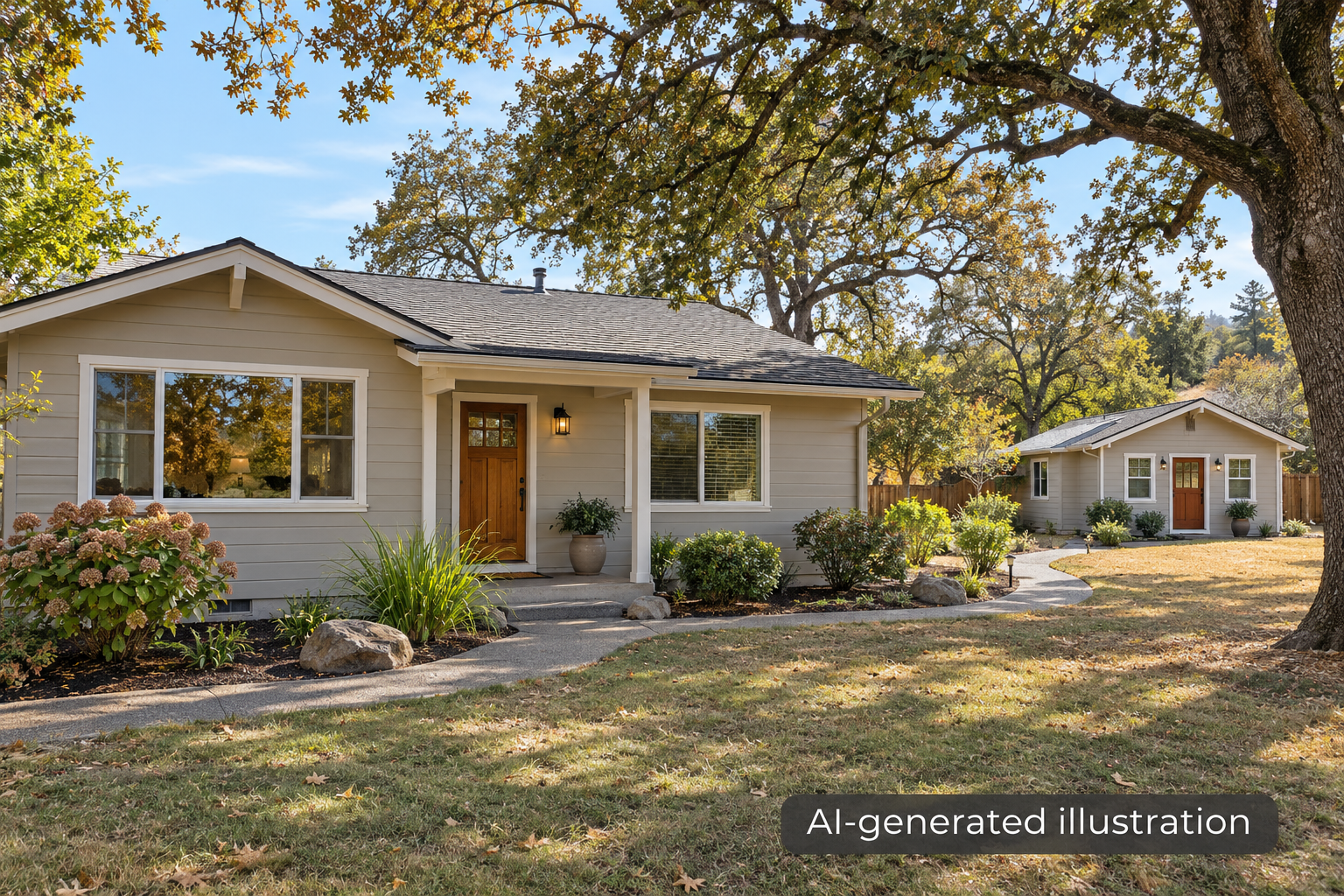
Orangevale has the sort of lots that make people look past the back fence and imagine a small cottage, office, or multigenerational space. Imagination is useful. It is not, however, a planning approval.
Sacramento County added updated ADU and junior ADU guidance on October 22, 2026. That makes this a good moment to separate what state law generally allows from what a particular Orangevale parcel can actually support.
Can every Orangevale property have an ADU?
No. A property needs a parcel-specific review before anyone should promise that an ADU can be built. Sacramento County tells owners to verify the jurisdiction shown for the parcel, not simply the postal city or ZIP code, and then review the applicable zoning and any special planning rules.
For parcels in unincorporated Sacramento County, the County’s current Appendix A provides the ADU and JADU review framework. It says properties developed with a primary residential use may have ADUs within specified zones, but it also says the standard ADU and JADU path does not apply in Agricultural-Residential or Agricultural zones. Other dwelling categories may exist, but that is a different analysis.
Orangevale is not a row of identical parcels wearing the same mailbox. One address may have a straightforward residential lot; another may have an overlay, an easement, septic constraints, or a zoning designation that changes the conversation.
What should buyers verify before writing an offer?
Buyers should verify the governing rules and the physical site before assigning value to future ADU potential. Start with the parcel record, then move to zoning, permit history, utilities, access, and professional feasibility. A listing phrase such as “room for an ADU” is an invitation to investigate, not a permit.
| Question | Why it matters | Where to verify |
|---|---|---|
| Who has jurisdiction? | County and city rules differ. | Sacramento County parcel map and planning staff |
| What is the zoning? | Allowed unit types and standards can vary. | Parcel details and current zoning guidance |
| What limits the site? | Setbacks, easements, trees, drainage, and access affect placement. | Survey, title report, site plan, and qualified professionals |
| Can utilities serve it? | Sewer, septic, water, power, and fire access can change cost or feasibility. | Utility providers, environmental health, fire authority, and contractor |
| What has been permitted? | Existing work may affect the design or approval path. | County permit records and inspections |
If you are comparing an existing home with future flexibility, I can help you frame the right property questions while you review current options, including homes on the approved price-reduced homes page.
How much does the physical site matter?
The site matters as much as the rule book. A lot can be large on paper and still have limited buildable space because of setbacks, access, utility locations, easements, drainage, trees, septic components, or the position of the existing house and garage.
Sacramento County offers shelf-ready detached ADU plans for residents in unincorporated areas. That can simplify the design and plan-check side, but a prechecked plan does not erase the need for a site plan or parcel-specific review. The County still has to determine whether the chosen plan fits the property and applicable standards.
My practical rule is to price the home you can verify today and treat a possible future unit as conditional until the right agencies and professionals say otherwise. The backyard may be generous. Government forms remain unimpressed by optimism.
Should buyers count future rental income in the purchase budget?
Not without lender and appraisal guidance. A proposed ADU is not the same as a completed, legal, rentable unit, and financing treatment can depend on the loan program, plans, permits, construction budget, appraisal, and borrower qualifications.
Buyers should ask a lender what documentation would be required before including any projected income. They should also budget for design, permits, site work, utility connections, construction, insurance, and reserves. A neat floor plan is only one line in a much longer spreadsheet.
Sellers considering how an ADU might affect positioning should begin with today’s property facts, not a hypothetical income stream. You can request a current home-value review, and I will help distinguish existing features from unverified future possibilities.
How should sellers market ADU potential?
Sellers should describe verified facts and clearly qualify anything that still requires investigation. If there is a permitted ADU, gather the permit history, final inspection records, utility information, and any relevant rental documentation. If there is only space that might support a future unit, say so carefully.
Phrases such as “ADU-ready” can sound more certain than the file supports. Better marketing identifies the lot size and existing improvements, notes any available records, and tells buyers to verify their intended use with the appropriate agencies. Clarity is not timid marketing. It keeps the property’s possibilities from outrunning the paperwork.
Orangevale ADU due-diligence checklist
Use this checklist before placing a value on an existing or potential second unit:
- Confirm the parcel’s jurisdiction, zoning, overlays, and current primary residential use.
- Review title documents, easements, surveys, and available permit history.
- Measure realistic placement areas after setbacks, access, trees, drainage, and other constraints.
- Identify sewer or septic, water, electrical, gas, and fire-access requirements.
- Ask planning and building staff which ADU, JADU, conversion, or other dwelling path applies.
- Obtain contractor or design estimates that include site work and utility connections.
- Confirm financing, appraisal, insurance, and rental assumptions independently.
- Keep every representation in the listing and offer documents accurate and appropriately qualified.
My bottom line
An ADU can add flexibility to an Orangevale property, but the valuable word is “can.” The best decision starts with the parcel record, current County guidance, a realistic site review, and written answers from the people who issue permits, extend utilities, lend money, and insure the result.
If an Orangevale home is on your short list, or you are preparing one for sale, call me at 916-909-1411 or email lpierce@windermereca.com. I will help you organize the property questions before a possibility gets priced like a certainty.
Frequently Asked Questions
Does a large Orangevale lot automatically qualify for an ADU?
No. Lot size is only one factor. Jurisdiction, zoning, existing use, setbacks, access, easements, utilities, drainage, trees, septic conditions, and other rules can affect feasibility.
Are Sacramento County shelf-ready ADU plans automatically approved for my property?
No. The plans can streamline design and plan review, but the County still requires parcel-specific site and permit review.
Can a seller advertise “ADU potential” without a permit?
A seller can describe relevant property facts, but any future-use statement should be accurate, qualified, and subject to buyer verification. Avoid language that implies approval when none has been issued.
Should I make an offer contingent on ADU feasibility?
That depends on how important the ADU is to your decision and whether the proposed investigation can be completed within the transaction timeline. Discuss inspection, document-review, financing, and permit questions with the appropriate professionals before drafting terms.
About Lauren Pierce
Lauren Pierce is a Northern California Realtor® with Windermere Signature Properties, serving buyers and sellers in Orangevale and surrounding communities. She helps clients evaluate property features, disclosures, local questions, and market positioning before they commit.
CA DRE #02444148
916-909-1411 | lpierce@windermereca.com
https://homebuyinginnorcal.com/