Two homes in Lincoln, one list price. What changes the monthly cost?
Last updated November 22, 2026
Start with the same loan for both addresses, then compare the taxes for each parcel, homeowners insurance and HOA dues. In the example below, two $600,000 Lincoln homes have identical mortgage principal and interest. One costs $270 more per month before utilities or upkeep.
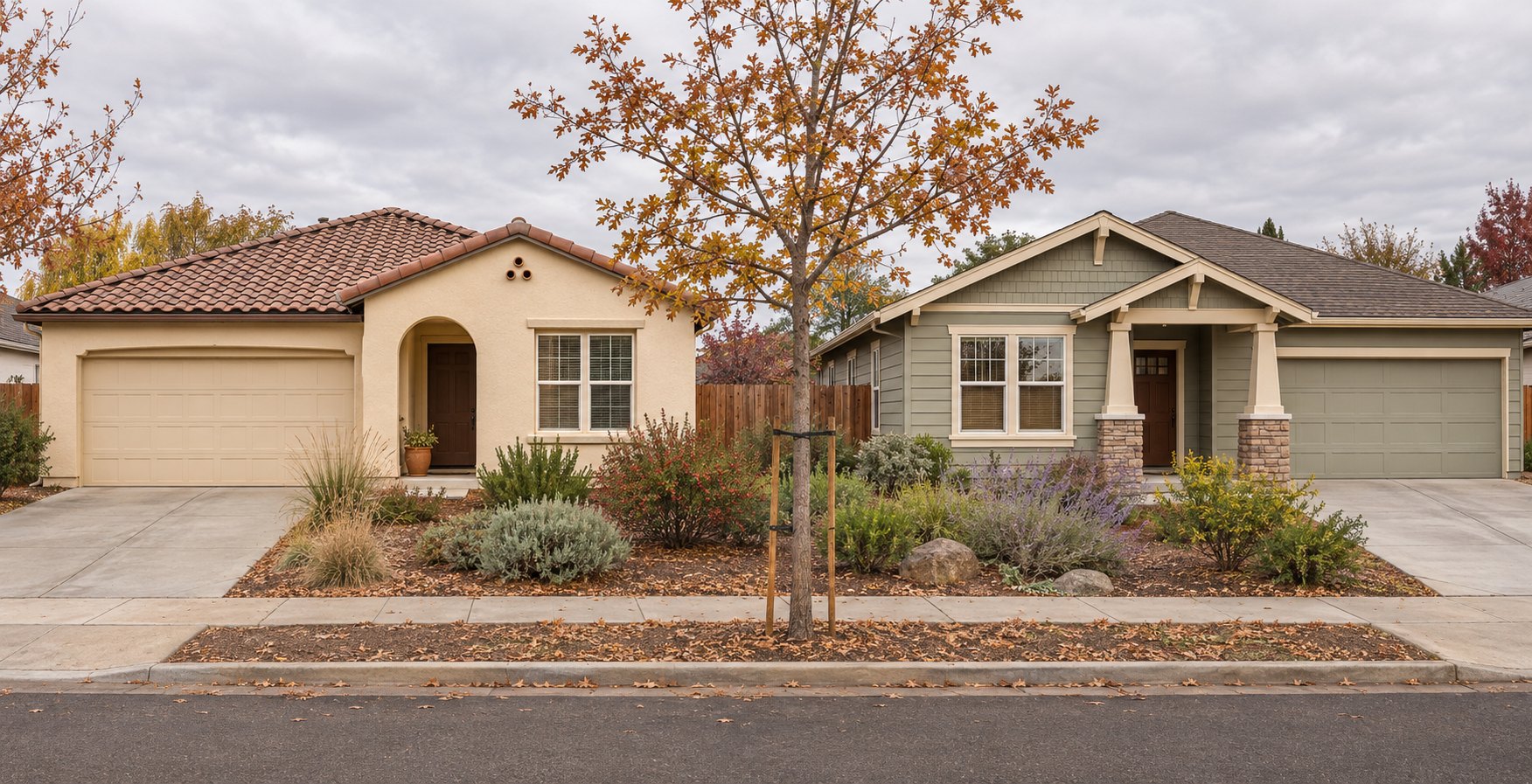
If two listings fit your price filter, it’s tempting to spend the second tour deciding which kitchen you prefer. I’d take ten minutes beforehand to find out what each address would leave in your checking account at the end of the month. In Lincoln, the assessor’s parcel number can tell you more about that difference than the name of the neighborhood.
What does the same $600,000 buy each month?
Suppose you buy either home at its asking price, put $120,000 down and finance $480,000 for 30 years at a fixed 6%. That makes principal and interest about $2,878 a month for either house. The rate, homes and charges below are illustrative. Use lender and insurance quotes for your own comparison.
| Illustrative monthly amounts | Home A | Home B |
|---|---|---|
| Principal and interest | $2,878 | $2,878 |
| Taxes based on assessed value | $550 | $550 |
| Parcel-specific taxes and charges | $50 | $200 |
| Homeowners insurance | $150 | $175 |
| HOA dues | $0 | $95 |
| Monthly subtotal | $3,628 | $3,898 |
Home B costs $3,240 more per year in this example. Of the $270 monthly gap, $150 comes from parcel charges, $95 from dues and $25 from insurance. If your budget for these items tops out at $3,800, Home A leaves $172 of room. Home B crosses that line by $98. You can decide whether its features are worth that stretch before writing an offer.
Which taxes actually follow the Lincoln address?
Ask for the parcel number and the current itemized property tax bill for each home. Separate taxes tied to assessed value from direct charges listed for that parcel. A community facilities district can levy a special tax, often called Mello-Roos. Lincoln’s fiscal 2024–25 report for CFD 2018-1, for example, identifies Village 11 in Twelve Bridges as a specific tax zone. That’s a reason to look up the lot before borrowing a number from a nearby listing.
Start with Placer County’s property lookup resources and ask the district administrator about any line you can’t identify. For a newly built home, ask for the estimate for the finished home on that lot. Confirm which charges are included in the lender’s tax estimate before adding anything to your worksheet. It’s easy to count the same special tax twice.
Why can the seller’s tax bill look so much lower?
The seller’s bill reflects the assessed value on the county roll. When ownership changes or new construction is completed, Placer County generally reappraises the property. Use a post-purchase estimate for your ongoing budget. Keep a separate amount available for the transition: the county explains that one or sometimes two supplemental bills can arrive in addition to the regular bill. Those bills reconcile the change in value for a particular period. Adding the same supplemental amount to every future year would distort the comparison.
What will you pay outside the mortgage payment?
Open page one of your Loan Estimate and look at the projected payment and the escrow column. Mark which taxes and insurance you’ll pay through the lender. HOA dues are usually billed separately. Ask for the current dues statement and what the association pays for. If the dues cover front-yard maintenance you’d otherwise pay for yourself, put that saving on the same worksheet.
Get insurance quotes for the two addresses using comparable coverage and deductibles. Then add costs this example leaves open: utilities, maintenance and any solar lease payment. Ask for recent bills where available. If one seller offers a closing credit, ask your lender to show the cash due at closing separately from the ongoing payment. That way a one-time saving stays in the right column.
My bottom line
Bring the two addresses, your down payment and the monthly number you want to stay under. I’d start with the largest unknown on the worksheet. If that’s a special tax, get the parcel breakdown. If it’s insurance, get two quotes. Once those gaps are filled, you can tour both homes knowing what you’d give up each month to choose your favorite. If you’re still working out the loan side, you can start a prequalification request and ask for both homes to be priced on the same terms.